
When Jammu and Kashmir dramatically lifted their maiden title in February 2026, it sent absolute shockwaves through the established order of Indian domestic cricket. The historic victory over Karnataka proved that no established giant is ever completely safe from hungry challengers. However, predicting which state will consistently dominate first-class cricket requires looking back at decades of absolute sporting supremacy.
The Undisputed Kings of the West
Mumbai and Their Unmatched Legacy
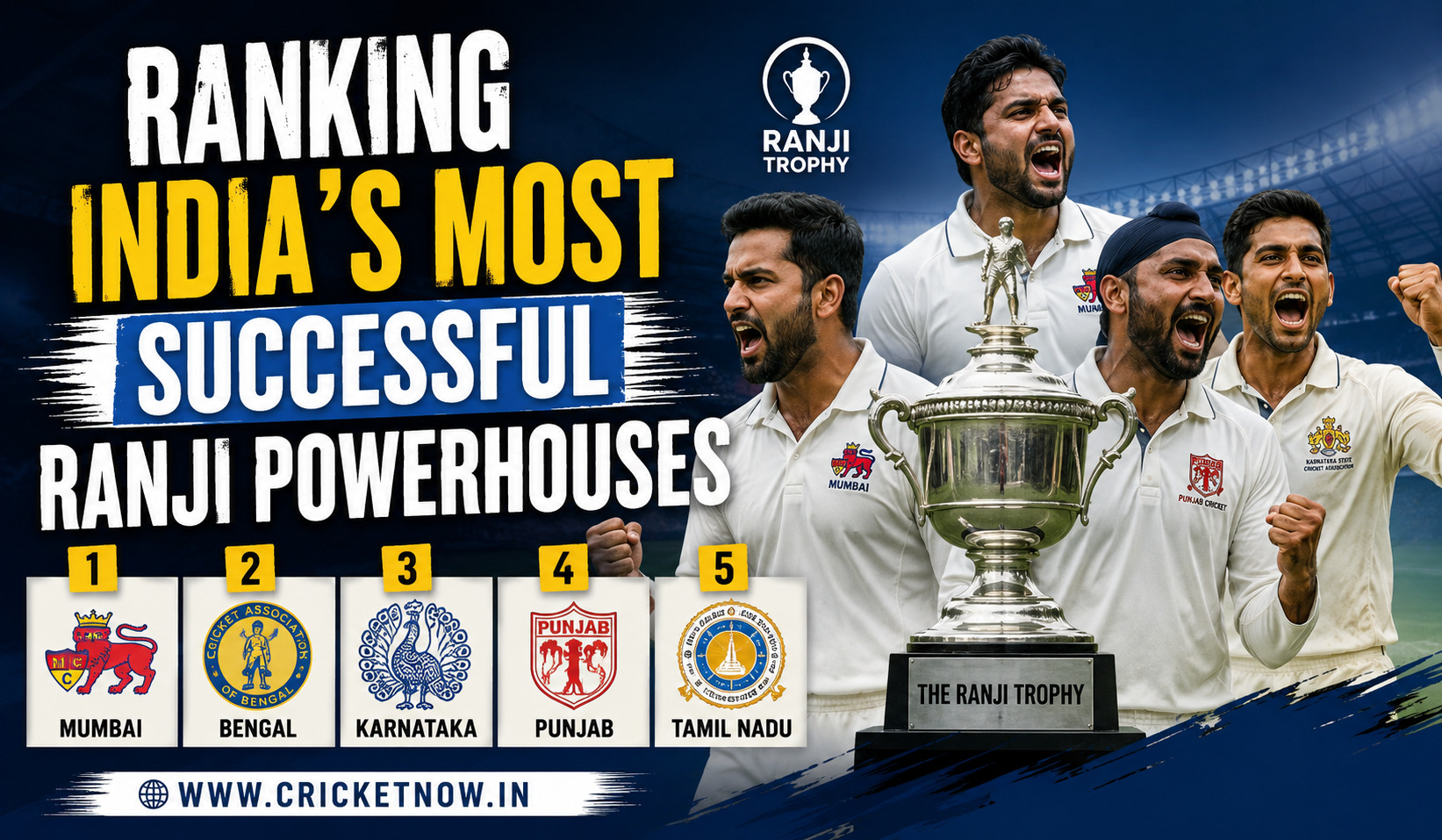
When you discuss the greatest Ranji powerhouses, the conversation must always begin and end with Mumbai. They have secured a staggering 42 championships, most recently lifting the trophy in the 2023-24 season under the calm leadership of Ajinkya Rahane. Their historical dominance is built on a ruthless cricketing culture known as the ‘khadoos’ mindset, which translates to a stubborn, never-say-die attitude on the pitch. Over the decades, this specific region has produced an endless assembly line of global batting superstars who have completely defined the sport.
Building a championship squad among Ranji powerhouses is much like assembling a high-performance sports car engine. You need the exact ratio of active components, from veteran anchors acting as the heavy stabilizing cylinders to fiery young fast bowlers providing the explosive spark, to create a final machine that actually works under extreme pressure. Mumbai has perfected this specific formula year after year. They effortlessly blend seasoned veterans with aggressive young prodigies fresh out of local academies. This strategic balance ensures that they remain the most feared opponents among all Ranji powerhouses.
Furthermore, their success is not just about relying on one or two star players to carry the entire team. When analyzing the top tier of Indian domestic cricket, we must look beyond basic team statistics. Evaluating true red-ball dominance requires looking at how many unique match-winners a state can produce across different eras. Mumbai has consistently developed hundreds of distinct match-winners, making them one of the most successful Ranji teams in global sporting history. Players like Wasim Jaffer, who amassed a monumental 12,038 runs, are a true testament to this relentless pursuit of batting excellence.
The Southern Giants Changing the Game
Karnataka’s Multiple Golden Eras
Moving down south, Karnataka stands tall as the primary historical challenger among all established Ranji powerhouses. With eight magnificent titles to their name, they are unequivocally one of the elite Ranji powerhouses. Their most recent appearance in the 2025-26 final ended in a heartbreaking loss to Jammu and Kashmir, but their consistent ability to reach the knockout stages is truly commendable. During the late 1990s and again in the mid-2010s, Karnataka assembled squads that looked completely invincible on paper.
Their bowling attacks have historically been their strongest asset in first-class cricket. Legends like Anil Kumble and E.A.S. Prasanna utilized turning tracks to absolutely bamboozle visiting batters. In more recent years, fast bowlers like Vinay Kumar led the charge on responsive green pitches. They heavily invest in their grassroots academies, ensuring a constant flow of technically sound players who understand the fundamental mechanics of the red-ball format. This dedicated investment keeps them firmly cemented at the very top of the list of most successful Ranji teams. Even when facing fierce modern competition, the batters from Karnataka consistently post massive first-innings totals at the M. Chinnaswamy Stadium.
Tamil Nadu and Southern Competitors
While Tamil Nadu only has two championships to their name, their consistent presence in finals and semi-finals demands immense respect from cricket analysts. They often play a highly attractive brand of cricket, though they sometimes struggle to close out crucial pressure moments in the longest format. They are widely known for producing brilliant mystery spinners who dominate the shorter white-ball formats but also transition extremely well into four-day games. Visiting teams always expect a grueling physical battle against highly determined local players. The athletes from this region know their home conditions intimately and utilize local knowledge to rigorously restrict visiting batters.
The Fierce Competitors from the North
Delhi’s Aggressive Brand of Cricket
Delhi has proudly secured seven championships, firmly establishing themselves among the traditional Ranji powerhouses. Their brand of cricket directly reflects the aggressive, fast-paced nature of the capital city itself. Delhi players are notoriously vocal, highly competitive, and never back down from a verbal or physical challenge on the field. This confrontational approach has yielded spectacular results against more conservative teams who prefer a quiet, methodical style of play.
Just as a master chess player meticulously studies opponent tendencies to launch successful attacks, modern cricket analysts study pitch data and opponent weaknesses to launch successful tournament campaigns. Delhi has historically excelled at identifying and exploiting the psychological flaws of opposing captains. By applying relentless verbal and tactical pressure, they force the opposition into making highly uncharacteristic mistakes.
However, administrative hurdles and internal squad politics have occasionally derailed their campaigns in recent years. First-class cricket requires total operational harmony off the field to achieve consistent results on the field. If they can successfully streamline their off-field management and focus entirely on player development, they possess more than enough raw talent to quickly add another championship trophy to their storied cabinet. They remain one of the most closely watched Ranji powerhouses by national selectors.
The Modern Era Disruptors and New Champions
Vidarbha’s Tactical Masterclass
For decades, the conversation regarding Ranji powerhouses was heavily restricted to just a few major metropolitan cities. That completely shifted when Vidarbha rose to prominence in stunning fashion. They secured massive back-to-back victories in the 2017-18 and 2018-19 seasons. They then proved their undeniable staying power by winning a phenomenal third title in the recent 2024-25 season, thoroughly defeating Kerala in a highly anticipated final.
Under the brilliant leadership of Akshay Wadkar and the phenomenal bowling of Harsh Dubey, who took an astonishing 69 wickets in that single season, Vidarbha executed a perfect tactical masterclass. They do not rely heavily on flashy international superstars to save them. Instead, they focus entirely on intense physical discipline, rigorous fitness standards, and executing basic bowling plans perfectly. Their spectacular rise proves that proper scouting and dedicated coaching can easily transform a perceived underdog into one of the most successful Ranji teams of the modern era.
Saurashtra and Madhya Pradesh
Saurashtra is another incredible success story in modern Indian domestic cricket. With recent titles in 2019-20 and 2022-23, they have permanently altered the continental balance of power. Captain Jaydev Unadkat transformed a squad of hardworking players into a relentless winning machine. They turned their home ground in Rajkot into an absolute fortress where visiting teams rarely survive the grueling spin-friendly conditions.
Similarly, Madhya Pradesh shocked the nation by securing a historic title in the 2021-22 season. Their coach implemented a ruthless, uncompromising training regime that demanded absolute perfection from every single squad member. These modern champions perfectly exemplify how regional associations can intelligently utilize superior tactical coaching to defeat traditional Ranji powerhouses. They have collectively proven that the title of a true powerhouse is earned through modern tactics, not just historical reputation.
The Impact of Pitch Conditions on Team Success
Understanding how specific pitch preparation affects tournament outcomes is absolutely essential for any dedicated follower of first-class cricket. The massive, diverse geography of the country means that players must constantly adapt to wildly different surfaces from week to week.
- Red Soil Pitches in the West: Venues in Mumbai and Gujarat typically feature bouncy red soil. These pitches offer steep, dangerous bounce for fast bowlers on the first day, but eventually become a true paradise for aggressive batters who love playing authoritative cut and pull shots.
- Turning Tracks in the South: Stadiums in Chennai and Bengaluru frequently present dry, highly abrasive surfaces. Spinners become completely unplayable by the third afternoon, making the pre-match coin toss incredibly crucial for determining the final outcome.
- Seam-Friendly Green Tops in the North: Matches played during the peak winter months in Delhi or Himachal Pradesh feature heavy morning moisture. Opening batters must survive treacherous swinging deliveries, placing a massive premium on possessing a rock-solid defensive technique.
- Slow Turners in the Center: Emerging Ranji powerhouses like Vidarbha often prepare slow, low pitches that demand extreme physical patience. Fast bowlers must maintain immaculate lines for extended periods, severely testing their physical endurance over four long days.
Why Historical Dominance Does Not Guarantee Future Wins
The stunning climax of the 2025-26 season perfectly illustrates the sheer unpredictable nature of Indian domestic cricket. Jammu and Kashmir, a team historically relegated to the lower regional tiers, completely defied all logical expectations. Led by the experienced Paras Dogra and the lethal bowling of Auqib Nabi, who claimed 60 wickets throughout the campaign, they marched all the way to the grand final. There, they achieved the unthinkable by thoroughly defeating a stacked Karnataka side to claim their first-ever championship.
This historic victory sent a very loud, undeniable message to all the traditional Ranji powerhouses. You simply cannot rely on past glory or historical reputations to win modern matches. The extensive availability of high-quality coaching, advanced video analysis software, and dedicated fitness programs has completely leveled the playing field. Today, a highly motivated team from a smaller region can absolutely dismantle a squad full of established international veterans.
As we look toward the upcoming decade, the fundamental definition of what constitutes a powerhouse is rapidly evolving. The established giants must continuously innovate their tactical approaches if they wish to remain at the absolute top of the mountain. The fierce hunger shown by emerging states guarantees that the upcoming seasons will be more intensely competitive than ever before. We are witnessing a glorious democratization of talent across the entire nation, challenging the old guard of Ranji powerhouses.
Frequently Asked Questions
Which team has won the most titles among the Ranji powerhouses?
Mumbai is the undisputed historical leader, having won the prestigious championship a staggering 42 times since the tournament officially began in 1934. Their most recent red-ball victory occurred during the highly competitive 2023-24 season when they defeated Vidarbha.
How does the tournament format decide the ultimate champion?
The massive tournament features 38 regional teams divided into Elite and Plate groups. They play a grueling round-robin format within their specific designated groups. The top-performing teams then advance to a tense knockout stage consisting of quarter-finals, semi-finals, and a grand final to decide the ultimate winner of first-class cricket in the country.
Did any new teams join the ranks of Ranji powerhouses recently?
Yes, Vidarbha has securely cemented their status by winning three titles since 2017, including the dominant 2024-25 championship. Furthermore, Jammu and Kashmir completely shocked the global sporting world by winning their incredible maiden title in the 2025-26 season.