

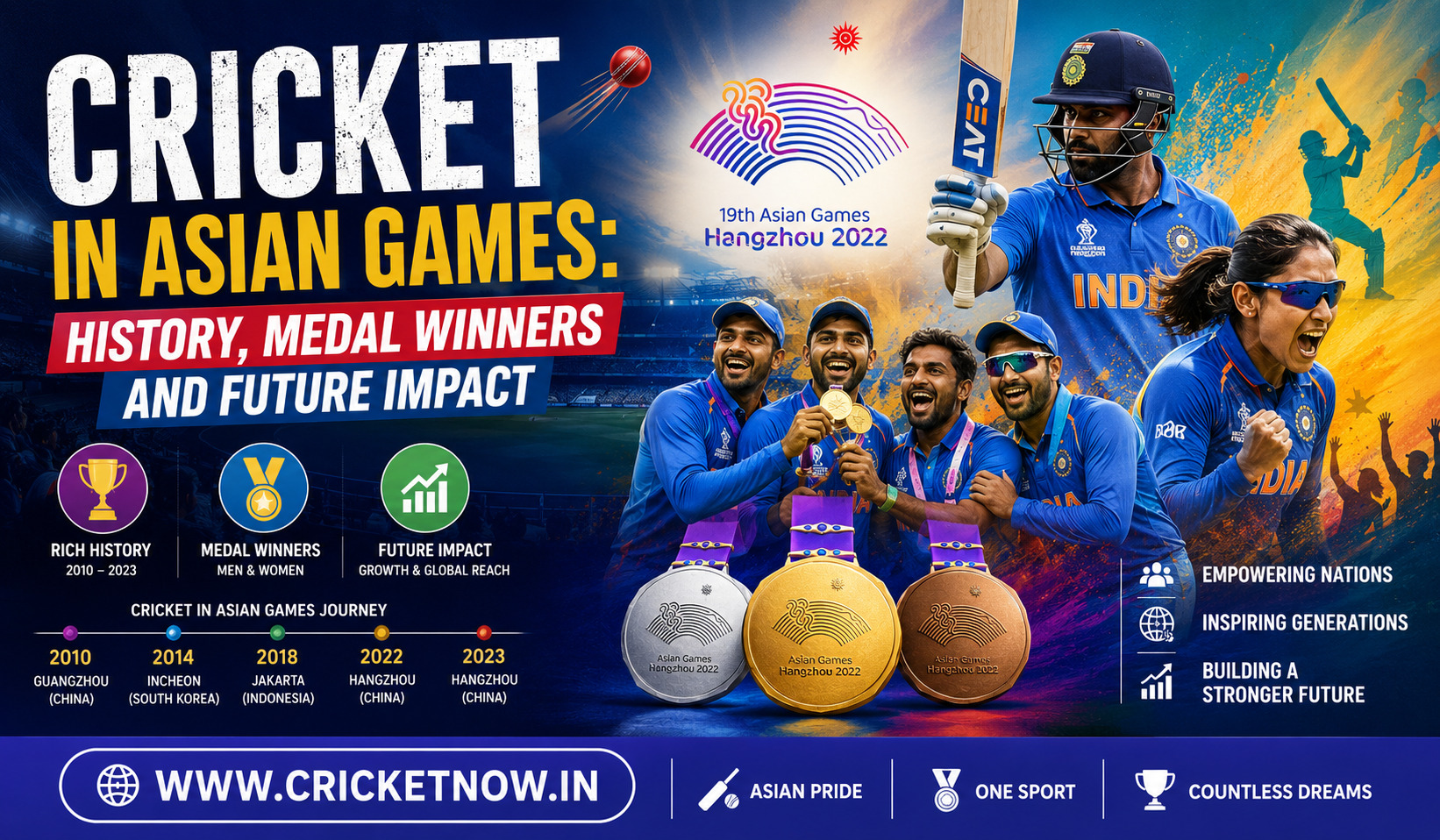
Cricket in Asian Games has transformed from a one-time experiment into one of the most exciting additions to the continental sporting calendar. Every edition brings together established cricketing nations and emerging teams, creating matches that carry national pride, medal ambitions, and valuable international exposure. For fantasy cricket followers and serious fans, the tournament also offers an opportunity to identify future stars before they become household names.
Why Cricket in Asian Games Matters More Than Ever
The inclusion of Cricket in Asian Games has given the sport another prestigious international platform beyond ICC tournaments. Unlike bilateral series, every match carries knockout pressure because one poor performance can end a team’s medal hopes.
The tournament has also accelerated cricket’s growth across Asia. Countries with developing cricket programs gain rare opportunities to compete against giants such as India, Pakistan, Sri Lanka, Bangladesh, and Afghanistan in a multi-sport environment.
For fantasy league players, Asian Games cricket often introduces talented youngsters who later become regular selections in international cricket.
The History of Cricket in Asian Games
Cricket first appeared in the Asian Games in 2010 at Guangzhou, China. The competition featured both men’s and women’s events and immediately attracted attention from cricket supporters across the continent.
Although cricket was absent from the 2014 Asian Games in Incheon because of venue limitations, it returned successfully in 2023 at Hangzhou after the event was postponed from 2022.
Each edition has highlighted the expanding influence of cricket across Asia, with more associate nations challenging traditional powerhouses.
Timeline of Cricket in Asian Games
- 2010: Cricket debuted in Guangzhou.
- 2014: Cricket was not included.
- 2023: Cricket returned in Hangzhou using the T20 format.
- Future editions: Cricket is expected to remain an important attraction as the sport continues expanding globally.
Asian Games 2026 Indian men’s cricket team – full squad
Indian cricket squad for Asian Games 2026: Shreyas Iyer(C), Tilak Varma, Ravi Bishnoi, Abhishek Sharma, Nitish Kumar Reddy, Jasprit Bumrah, Sanju Samson (Wk), Axar Patel, Harshit Rana, Ishan Kishan(Wk), Washington Sundar, Arshdeep Singh, Shivam Dube, Varun Chakravarthy, Vaibhav Sooryavanshi
Format of Asian Games Cricket Tournament
The tournament follows the Twenty20 format, making every over extremely valuable. Fast scoring, aggressive captaincy, and tactical bowling changes often decide close matches.
Higher-ranked Asian teams generally receive direct entry into later stages, while lower-ranked nations compete through preliminary rounds. This structure rewards consistent international performances while giving emerging teams a realistic pathway to challenge stronger opponents.
For fantasy league players, understanding the tournament format is important because players from leading nations often play fewer matches before the knockout rounds.
Key Features of the Tournament
- Twenty20 format.
- Men’s and women’s competitions.
- Knockout focused scheduling.
- Continental medal event instead of ICC ranking competition.
- Opportunity for associate nations to compete against elite teams.
Memorable Moments in Cricket in Asian Games
Several matches have shaped the reputation of Cricket in Asian Games.
India claimed the men’s gold medal during the Hangzhou edition after defeating Afghanistan in a rain-affected final. The match highlighted India’s squad depth because the team featured several emerging players instead of its full-strength international lineup.
The women’s tournament also produced exciting contests, with India securing the gold medal after consistently dominating throughout the competition.
Earlier editions featured Bangladesh and Pakistan enjoying significant success, proving that the competition has never belonged to just one nation.
One of the biggest attractions of Asian Games cricket is unpredictability. Smaller nations frequently produce competitive performances that force traditional giants to earn every victory.
Medal Winners and Successful Nations
Men’s Competition
Historically, the men’s tournament has been dominated by established Asian cricket nations. Bangladesh, Pakistan, Sri Lanka, India, and Afghanistan have consistently competed for medals.
India added another major achievement by winning gold during the Hangzhou Games, while Afghanistan continued proving that its rapid rise in international cricket is no coincidence.
Women’s Competition
Women’s Cricket in Asian Games has grown equally competitive.
India has established itself as one of the strongest teams in Asia, while Pakistan, Bangladesh, Sri Lanka, and Thailand have all demonstrated impressive progress in different editions.
The increasing quality of women’s cricket has made every medal contest highly competitive.
What Fantasy League Players Should Watch
Fantasy cricket players often overlook Cricket in Asian Games, yet it can provide valuable insights before major ICC tournaments.
Young players receive opportunities that they might not get during bilateral series. Strong performances in continental events frequently influence future national team selections.
Consider these factors while building fantasy teams:
- Pick top-order batters because they face the most deliveries.
- Select death-over bowlers who regularly collect wickets.
- Monitor team announcements since several nations rotate squads.
- Study recent domestic T20 form rather than relying only on international records.
- Give additional importance to all-rounders because they contribute in multiple departments.
Selecting fantasy players is similar to choosing investments in a growing company. Experienced stars provide stability, while emerging players often deliver the biggest returns when they seize their opportunity.
How Cricket in Asian Games Helps Asian Cricket Grow
The influence of Cricket in Asian Games extends beyond medal ceremonies.
Developing cricket nations receive greater financial support, increased media attention, and more competitive exposure after participating in continental tournaments. Young athletes also gain motivation because representing their country at the Asian Games carries enormous prestige.
National cricket boards benefit by testing bench strength against quality opposition without the pressure of ICC global tournaments.
For countries such as Nepal, Thailand, Malaysia, Hong Kong, and Mongolia, participation itself represents significant progress in cricket development.
The tournament also supports cricket’s long-term global ambitions. Multi-sport events introduce new audiences who may later become regular followers of international cricket.
The Future of Cricket in Asian Games
The future looks promising for Cricket in Asian Games.
As T20 cricket continues expanding worldwide, continental competitions will become increasingly important for identifying emerging talent and strengthening cricket infrastructure across Asia.
The possibility of cricket featuring in more global multi-sport events also increases the importance of strong performances at the Asian Games.
Fans can expect:
- Greater participation from developing nations.
- Higher broadcast coverage.
- Improved playing facilities.
- Increased competition for medals.
- More young players progressing into international cricket.
Frequently Asked Questions
When was cricket first included in the Asian Games?
Cricket made its Asian Games debut in 2010 during the Guangzhou edition.
Does Cricket in Asian Games affect ICC rankings?
No. Matches played in the Asian Games do not contribute to ICC team rankings.
Which format is used in Asian Games cricket?
The competition uses the Twenty20 format for both men’s and women’s tournaments.
Why is Cricket in Asian Games important?
The tournament promotes cricket across Asia, provides international experience to emerging nations, and allows young players to showcase their talent on a major multi-sport stage.