

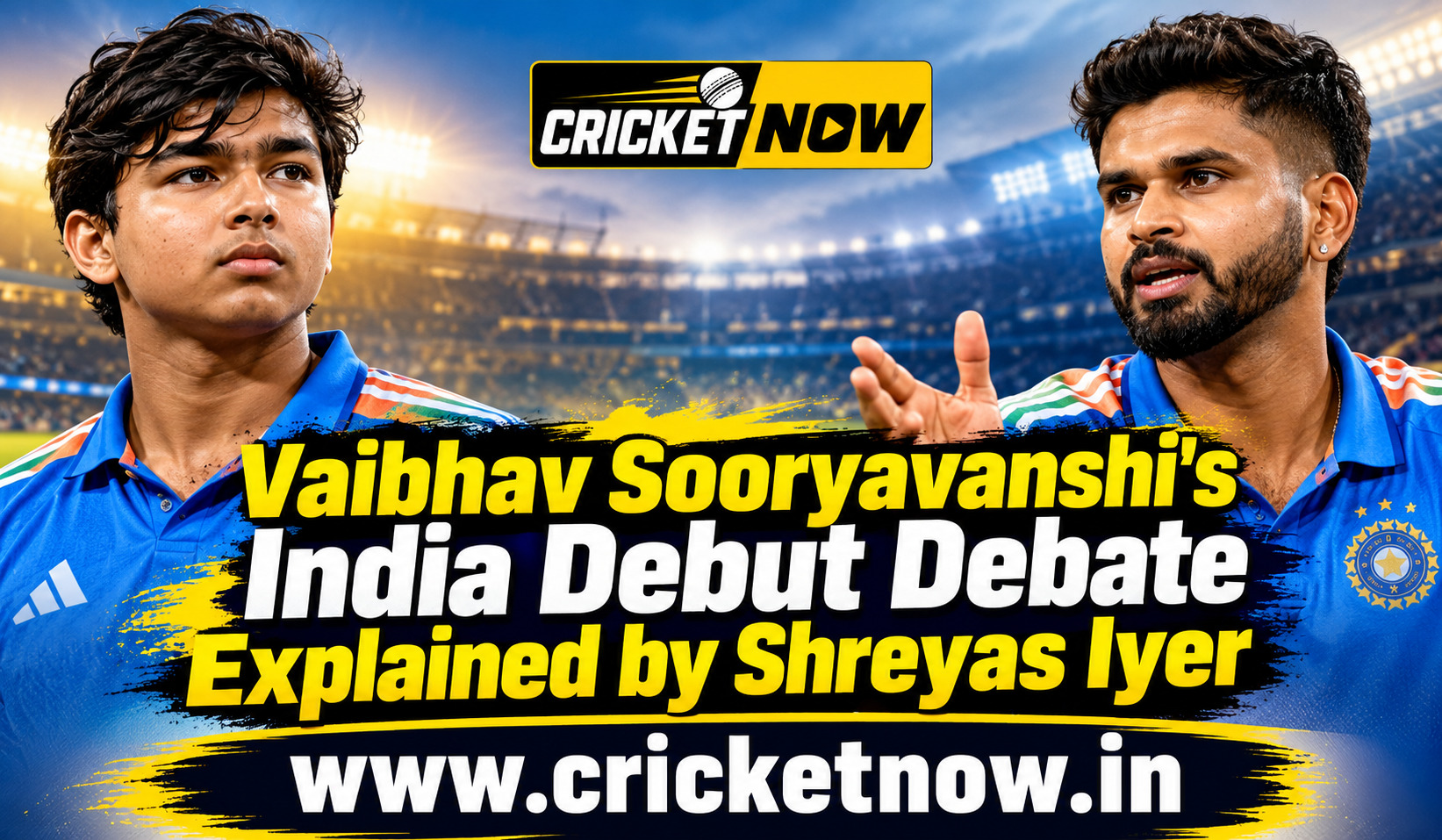
The debate surrounding Vaibhav Sooryavanshi’s place in India’s playing XI highlights one of the biggest challenges in international cricket: deciding when to give a young talent an opportunity and when to continue backing established players. The teenage batter has attracted enormous attention through his fearless batting, impressive performances, and ability to score runs at an extraordinary pace.
India captain Shreyas Iyer has offered a clear perspective on the discussion. Ahead of India’s T20I series against New Zealand, Iyer explained why Sooryavanshi cannot automatically enter the playing XI despite his exciting potential. His comments underline the importance of team balance, consistent performances, and respect for players who have already delivered results for India.
The discussion is not simply about whether Sooryavanshi has the talent to play international cricket. It is about finding the right opportunity for him without weakening a successful batting combination. With expectations growing around the young left-hander, the selection debate has become an important talking point among Indian cricket fans.
What Did Shreyas Iyer Say About Vaibhav Sooryavanshi?
Iyer’s message was straightforward: Sooryavanshi has a promising future, but he must be patient and wait for the right opportunity. The Indian captain acknowledged the teenager’s ability while explaining that established players deserve continued support when they are performing consistently.
According to Iyer, Sooryavanshi is still young and has plenty of time to establish himself in international cricket. He also stressed the importance of keeping the youngster positive within the dressing room instead of allowing the wait for selection to become a source of frustration.
The captain’s position reflects a broader principle in team selection. A player should not necessarily lose his place simply because another talented cricketer has attracted public attention. Selection decisions must consider recent performances, team combinations, individual roles, and the needs of the opposition.
Iyer’s comments do not suggest that India lacks confidence in Sooryavanshi. Instead, they indicate that the team management wants to manage his introduction carefully while maintaining confidence among players already contributing to the side.
Why Is Vaibhav Sooryavanshi’s Selection Creating Debate?
The excitement around Sooryavanshi comes from his aggressive approach and ability to score quickly against quality bowling. His performances in the Indian Premier League and other competitions have made him one of the most closely watched young batters in Indian cricket.
His journey into senior international cricket began in July 2026, when he made his T20I debut against England. However, earning an international cap has not guaranteed regular selection. His limited opportunities in subsequent matches have kept the discussion alive.
Three main factors explain the continuing debate.
1. His Impressive Batting Performances
Sooryavanshi has shown that he can attack bowlers without waiting for long periods to settle. His powerful hitting, quick scoring, and willingness to take risks make him particularly suited to the demands of T20 cricket.
His performances have encouraged fans to ask why a player with such potential should spend time on the sidelines. Supporters believe that giving him more matches could help India discover another match-winning opener.
However, strong performances in domestic and franchise cricket do not automatically guarantee success in every international match. The level of competition, bowling plans, and playing conditions can be very different.
2. Competition From Established Openers
India already has experienced options at the top of the order, particularly Abhishek Sharma and Sanju Samson. Both have contributed to India’s recent T20 success, giving the team management a strong reason to retain its preferred combination.
Selecting Sooryavanshi would mean changing the existing batting order or leaving another player out. Such a decision affects more than one position because it can influence the roles of other batters throughout the innings.
Iyer’s position is that selection must reward consistent performance rather than popularity alone. If the established openers continue delivering results, replacing them simply to accommodate another player could send the wrong message to the dressing room.
3. Managing a Young Player’s Development
Sooryavanshi is only 15, which means he has considerable time to develop his game. Regular international cricket can accelerate learning, but there is also value in understanding different conditions, observing experienced teammates, and preparing for specific opportunities.
Iyer wants the youngster to remain comfortable within the team environment. This matters because a player who feels supported can continue developing without viewing every selection decision as a setback.
The challenge for India is to balance patience with opportunity. Keeping a young player on the sidelines for too long can limit his experience, but introducing him at the right moment can give him the confidence and support needed to succeed.
Why India May Continue With Abhishek Sharma and Sanju Samson
India’s preference for Abhishek Sharma and Sanju Samson is central to the current discussion. Both players offer attacking options, and their established partnership provides continuity at the top of the order.
Abhishek’s aggressive approach allows India to pursue a high scoring rate during the powerplay. Samson brings his own attacking ability and experience, giving the team another batter capable of changing a match quickly.
For a captain, maintaining a successful combination can be just as important as identifying new talent. Frequent changes may prevent players from developing clear roles and building confidence in their partnerships.
| Selection factor | Why it matters |
| Recent performance | Rewards players who are contributing consistently |
| Team combination | Maintains stability at the top of the order |
| Playing conditions | Helps identify the most suitable opening pair |
| Long-term development | Gives Sooryavanshi time to learn and prepare |
| Future opportunities | Allows India to introduce changes when needed |
That does not mean the existing combination should remain unchanged forever. If performances decline or team requirements change, Sooryavanshi could become a stronger candidate for a regular place.
What Can Sooryavanshi Learn While Waiting?
Time outside the playing XI can still be useful if the player and team management approach it positively. Sooryavanshi can study how senior batters handle different bowling styles, prepare for unfamiliar pitches, and manage difficult periods during an innings.
The New Zealand tour offers a particularly useful learning opportunity. Conditions there can challenge visiting batters with movement off the pitch and assistance for seam bowlers. Learning how to adjust his footwork, judge deliveries, and select attacking shots could strengthen his game.
Opposition teams are also studying his batting. New Zealand fast bowler Jacob Duffy has indicated that the hosts have prepared plans to counter the teenager’s aggressive approach. This shows that Sooryavanshi’s reputation is already attracting serious attention from international opponents.
If he receives an opportunity, he will need to adapt quickly rather than rely entirely on the methods that brought him success in franchise cricket.
What Could Happen Next?
Sooryavanshi’s next opportunity will depend on team selection, the form of the current openers, and the conditions in which India plays. An injury, a change in strategy, or a need to test another combination could create an opening.
India could also choose to give him a match when the team believes his batting style suits the opposition. A carefully selected opportunity may help him build confidence while allowing the management to assess his readiness for a larger role.
For now, Iyer’s message is about patience and preparation. The captain has recognised the youngster’s talent without promising him an automatic place in the starting XI.
The debate also reflects a positive challenge for Indian cricket: the country has more promising batters than it can accommodate in a single team. Managing that competition fairly is essential if India wants to develop young players while continuing to compete at the highest level.
Frequently Asked Questions (FAQs)
1. What did Shreyas Iyer say about Vaibhav Sooryavanshi?
Iyer said Sooryavanshi has plenty of time to establish himself and cannot automatically enter the playing XI while the current openers are performing consistently. He also stressed the importance of keeping the young batter positive within the team.
2. Has Vaibhav Sooryavanshi made his India debut?
Yes. Sooryavanshi made his senior T20I debut against England in July 2026. The current debate concerns his regular selection in India’s playing XI rather than whether he has made his international debut.
3. Why is Vaibhav Sooryavanshi not a regular opener for India?
India has established opening options in Abhishek Sharma and Sanju Samson. Their performances and partnership have encouraged the team management to maintain its existing combination.
4. Can Vaibhav Sooryavanshi play against New Zealand?
His selection depends on India’s final playing XI, team strategy, and the performance of the established openers. His presence in the squad does not guarantee that he will play every match.
5. Will Vaibhav Sooryavanshi become a regular player for India?
He has the potential to become an important player, but regular selection will depend on his performances, preparation, and the team’s requirements. Consistency and adaptability will be important as he continues his international career.